
Cossack Squat
Cossack Squats: What They Are and Why You Should Care
If you’ve never heard of Cossack squats, or maybe you’ve heard the name but aren’t quite sure what they are- this post is for you.In simple words? Cossack squats are awesome. No joke.
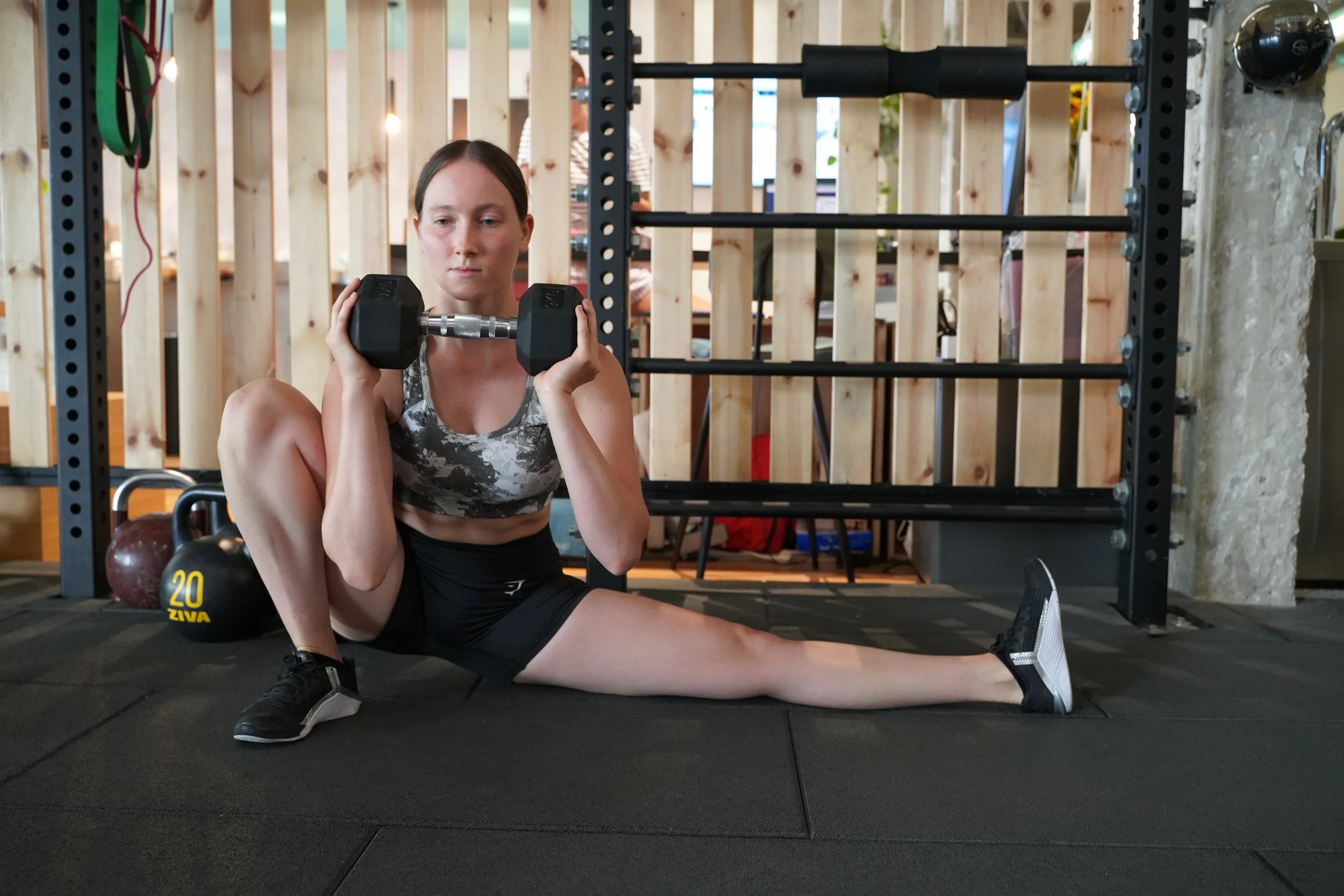
This side-squat variation builds both strength and flexibility in your hips at the same time.
The Cossack squat is performed in the frontal plane of motion (side to side).
What muscles do they work?
Compared to regular squats, Cossacks put more emphasis on your adductors (inner thighs) and hamstrings. They also challenge your hips, glutes, and core in a unique way.
Why bother with Cossacks?
Strengthen your hips in deep ranges of motion
Improve flexibility and mobility
Improve your BB back squats
Oh, and they look cool AF
How to progress:
Test your range first- see how low you can go.
Work on flexibility drills if needed (hips/ hamstrings/ Ankle).
Start with 3–6 reps per leg.
Once the movement feels smooth, add weight:
Dumbbells
Barbell in a Zercher hold
Barbell on your back
To build toward full depth, try seated Cossack squats with elevation, then slowly lower the elevation until you can do them flat on the ground.
Since this movement is a mix of skill, strength, and mobility, flexibility often feels like the limiting factor.
If that’s the case for you, here are some ways to improve it:
Mobility and Stretching Drills
• Hip rotations- to unlock and warm up your hips
• Front lunge stretch
• Side lunge stretch
• Ankle mobility work
Before you say, “This is too advanced for me,” try the following progressions:
• Use elevation- place your foot on a higher surface (like a bench) to make it easier. A lower surface (like a yoga block) makes it harder.
• Yoga blocks- hold them to help you reach the floor more comfortably.
No matter your starting point, I’m confident you’ll find the right progression to begin with.
👉 If you do these before your workout, keep them gentle and use them to open your ranges.
👉 If you do them at the end of your workout, you can safely push a bit further.
Active + Passive Stretching- I recommend combining both. For example:
Hold each stretch for at least 10 seconds while gently pushing deeper
Do 3 reps per stretch, for 2–4 sets
Aim to gradually increase your range with every rep
Note: When you add a dumbbell or other external weight, the load will naturally help you go deeper into the stretch.